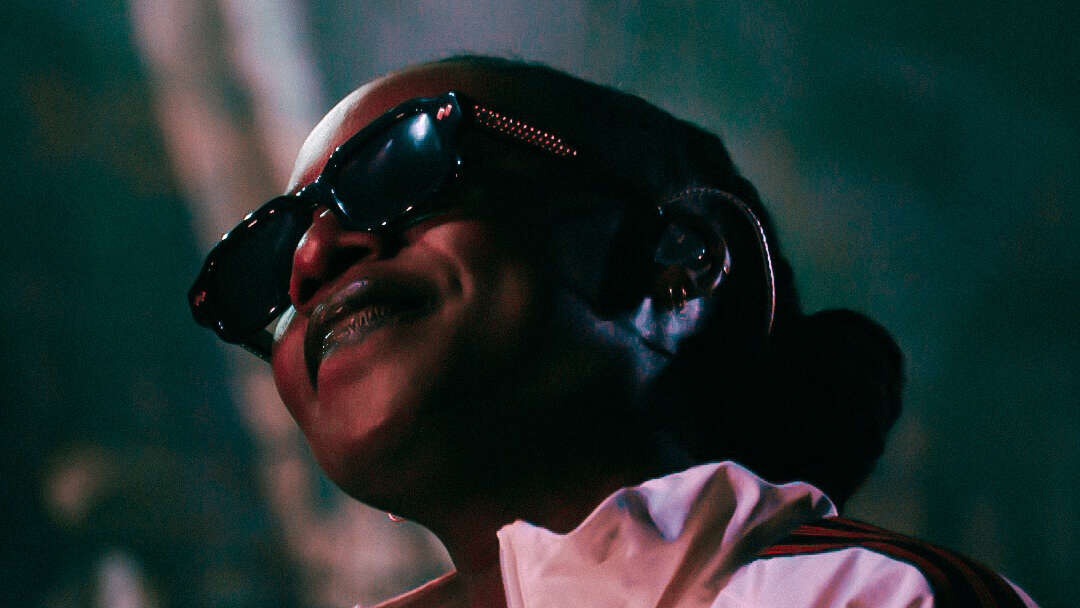
EFG London Jazz Festival 2026
In a year which saw Ezra Collective — whom the EFG London Jazz Festival championed on their come-up — make history as the first UK jazz group to score a No.1 album, it felt wholly appropriate to go double time and waltz through a festival spanning more than 60 of London’s best venues. With the festival back for its 34th edition, we jumped on the Jazz train to see out the 2026 festival calendar and find out what it takes to bring the genre to the masses.
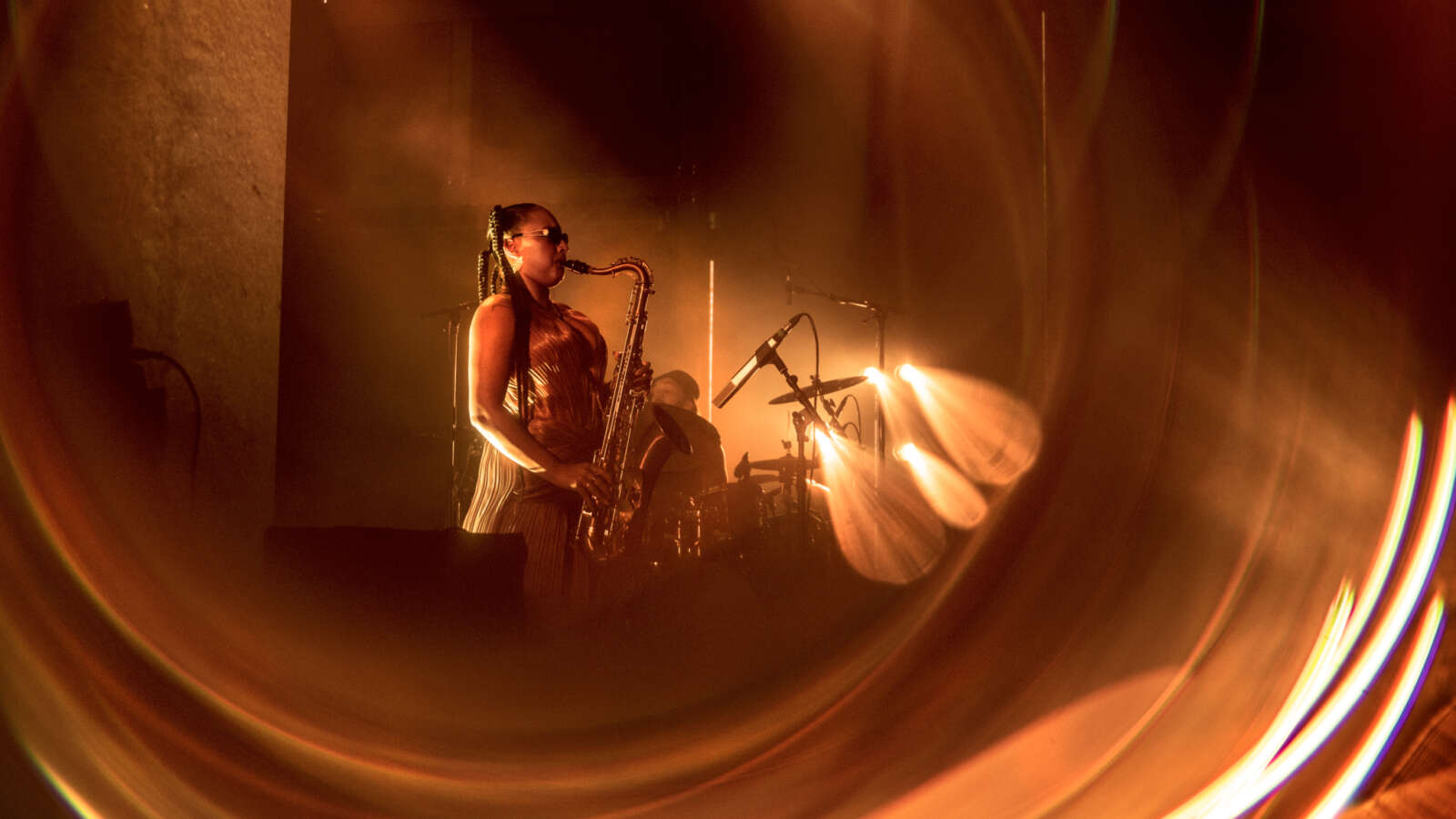
An Emma-Jean Thackray headline show opened our festival at the atmospheric and affable EartH Theatre. This was no standard Thackray show; rather her attempt to answer the question of what music the great Miles Davis would have made today. Her four-piece band, with the Yorkshire-born producer at the centre, melded new influences and technology in ways simply not possible in Davis’s lifetime — even for such a boundary pusher. As she wrote in an open letter, Davis — whom she first stumbled across by accident — made her want to play jazz by “splitting my brain to inhabit many roles at once”. Believing he’d still be blazing a trail today, mixing newer genres into his work, she set out to do the same: Laying jungle beneath jazz improvisation and folding drum machines in with jazz harmonies. Of Davis’s own reinventions, she said that “some people dug it, some people took a minute, some people never caught up”. On this Friday night, everyone was undoubtedly digging this 21st-century adaptation.

Onto Saturday and the festival’s first weekend, an abundance of community events — the beating heart of the festival, where everyone is welcome — were in full swing. Daylight Music runs on Saturday lunchtimes throughout the year., and its family-friendly, tea-and-cake ethos, which sparks conversation between artists and audiences, sits perfectly in the programme, with joint-banner events at both ends of the week.
It was here that the festival’s guiding principles truly shone. Canadian harpist Chris Clarke opened with a 16th-century piece, then made a convincing case that, despite its antiquity, “it feels like jazz to me”. Such is their belief that jazz’s influence was all-pervasive at the turn of the 20th century that a piece by religious composer Henriette Renié came next. Renié may have tried to distance herself from all things jazz but, played like this, her piece could easily have been mistaken for Dorothy Ashby. Jazz is everywhere and it welcomes all — even those who took a minute or haven’t yet caught up.
Over in Camden, Manchester-based GoGo Penguin took the stage on Tuesday for the second of their two nights at the stunning KOKO, traversing their eclectic mix of jazz, classical and electronic. Pianist Chris Illingworth’s signature grand piano, left open and constantly tinkered with — he placed pieces of cloth inside and manipulates its hammers to draw out different sounds — created an intimacy that contrasted with the expansive strobe lighting and rising tempos akin to a DJ’s build-up. Now on their seventh album, the trio were exceptionally tight, with bassist Nick Blacka and drummer Jon Scott playing off Illingworth with an instinctive understanding, each adding their own flourishes without ever disrupting the group’s fluidity. Preceding them was up-and-coming guitarist Rory Green, whose mesmerising loops created a nostalgic soundscape — his warm textures a welcome respite from a biting London November night.
Jazz is everywhere and it welcomes all — even those who took a minute or haven’t yet caught up.
Patrons in wintery attire filled the pews at the enchanting Union Chapel on Wednesday evening. Huddled inside, they found warmth in abundance, radiating from the two female-led, Latin American-infused acts. TRÍADA, fresh off the plane for their first-ever London show, began proceedings with a beautiful set melding Argentinian folk, flamenco and bossa-nova. They broke from their native Spanish only to address the crowd between songs, each of which transported you effortlessly out of Islington and straight to Buenos Aires. Making a slightly shorter journey from Oslo, singer and composer Charlotte Dos Santos welcomed the audience into her world of shared Brazilian and Norwegian heritage. She dazzled in front of her five-piece band as symbols crashed around the church, the sound feeling bigger than the space itself. This was an emotional and personal set, telling her story through songs both old and new. Our hours in this historic venue showed that the festival’s embracing ethos applies to both performer and punter alike, with acts crossing continents to be part of this celebration.
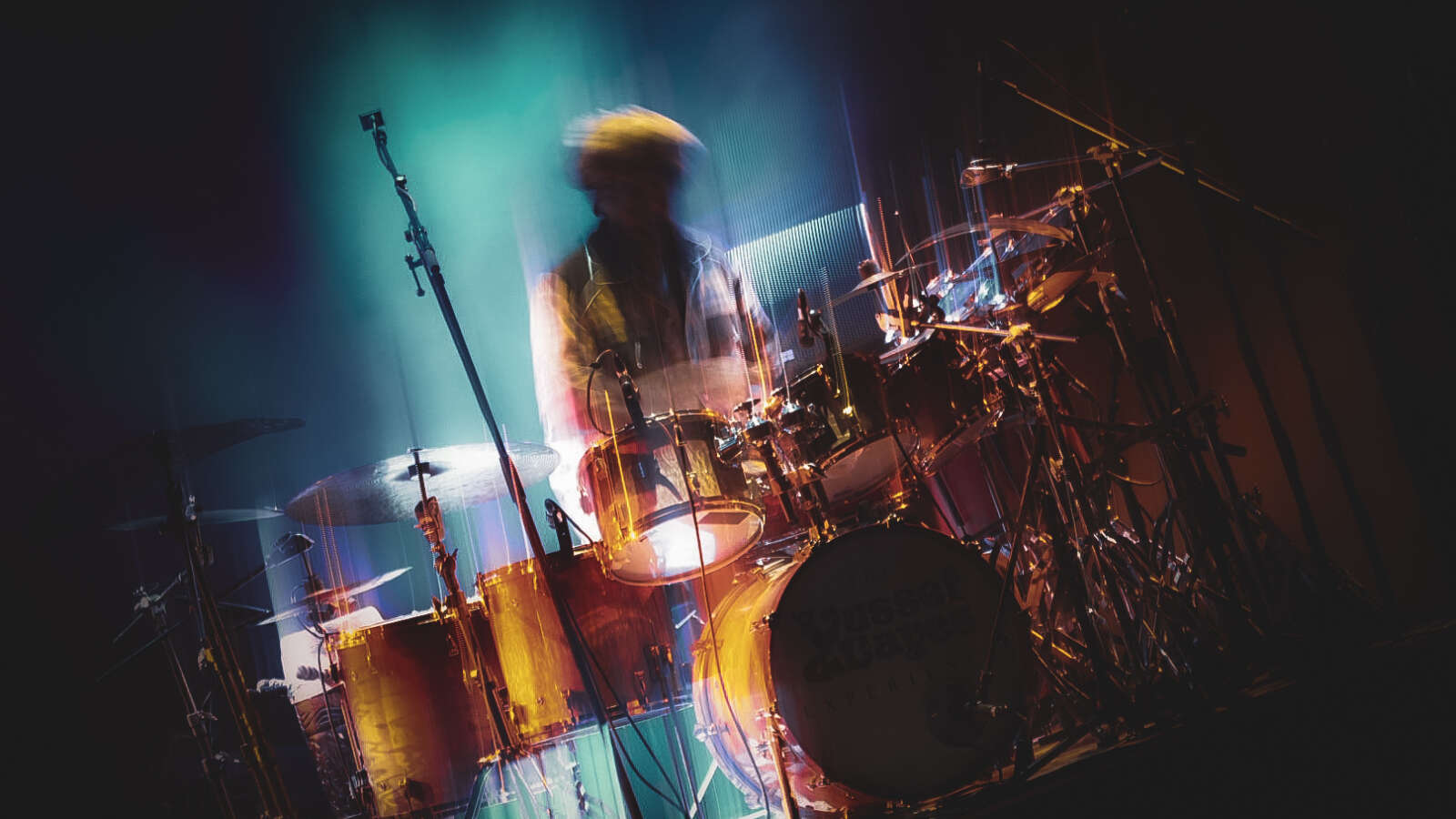
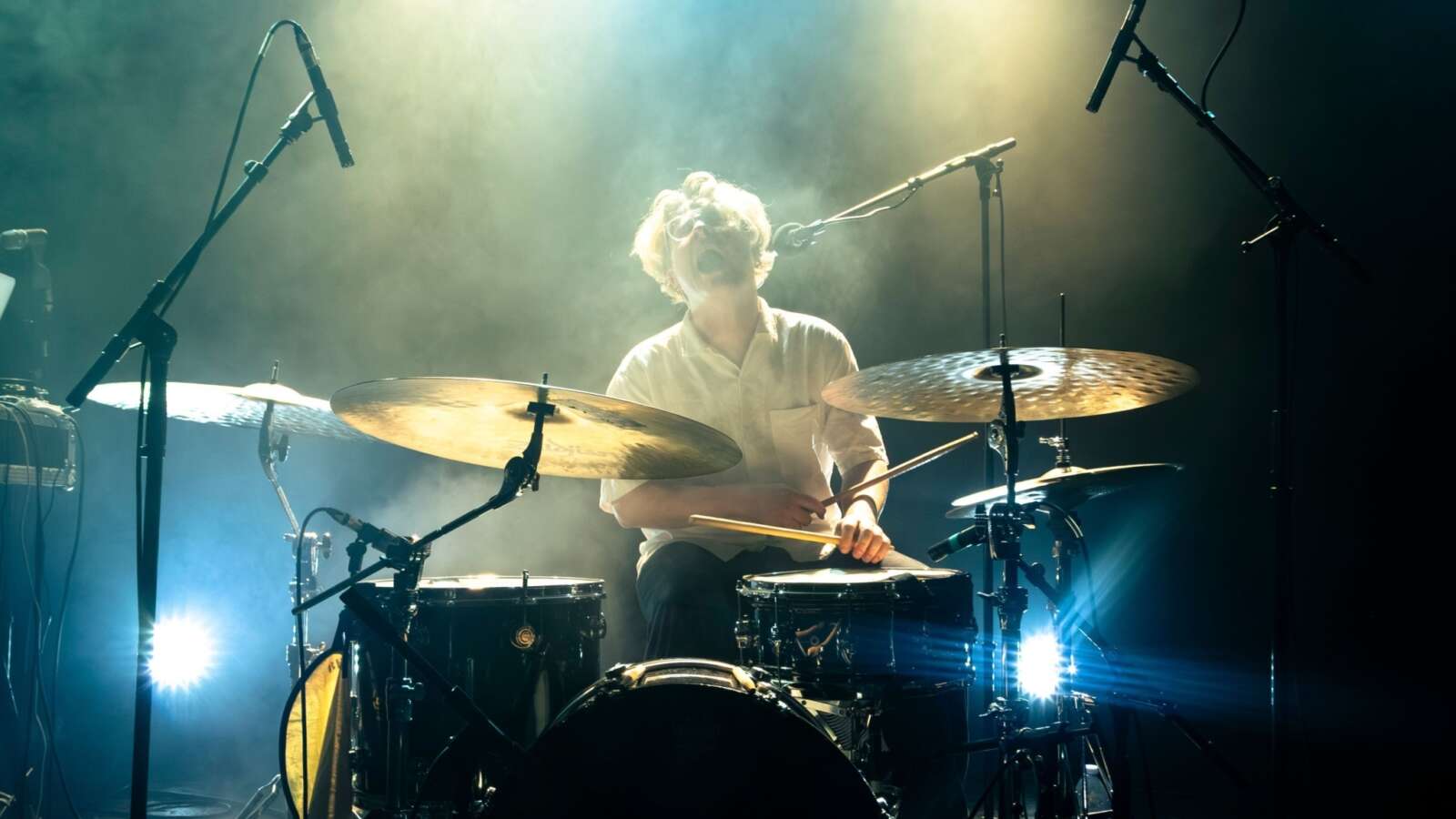
“We are so blessed in London” smirks drummer-vocalist Chris Ryan during an encore of ‘Wellness’, a Marmite, semi-viral piss-take. The line was delivered ironically, of course: the song’s about a sun-staring, barefoot influencer discovering activated charcoal in Pret. But it also felt fitting, given the elaborate buffet of options across the city that week. The Robocobra Quartet show at the wonderful Institute of Contemporary Arts was their first since the release of Hundred Pieces, a 100-track album that “everyone advised [them] not to make”. Spoken-word vocals alternated between deeply personal tales and poetically cutting critiques of life in the 2020s. Ryan delivered it all with a theatricality not unlike Model/Actriz’s Cole Haden, on occasion stepping away from his drum kit to scream cathartically into the front row. His chemistry with saxophonist Thibault Barillon evoked the joy of old friends making things just because they can — which, you sense, was also the point of the Belfast band’s epic release. This is jazz-infused post-punk that deserves a wider audience.

The final weekend saw us venture to the Barbican’s Pit, which joined the festival’s venues for the first time this year. Another richly diverse audience spanning all ages and cultures left not a spare seat in the house for a showcase of recent alumni from the renowned Take Five Collective. Participation was the name of the game as Marlon The Pannist brought his steel drum and calypso-inspired jazz to an excitable crowd. Deep in the belly of the famous Brutalist arts centre, Marlon and his band seriously raised the temperature close to that of his Caribbean roots. His friend and collaborator David Kayode followed, the gracious Ghanaian keen to stress that this was a shared headline show. He delivered a lung-busting performance that rolled through crescendos. Switching between woodwinds, he intuitively cued in every member of the band for free-flowing solos that could have been lead performances in their own right. Joining forces for the final song, the two musicians, who feature heavily together on Kayode’s debut album, shared a visible joy. Their welcoming embrace felt as much for everyone in the audience as for the pair of them.
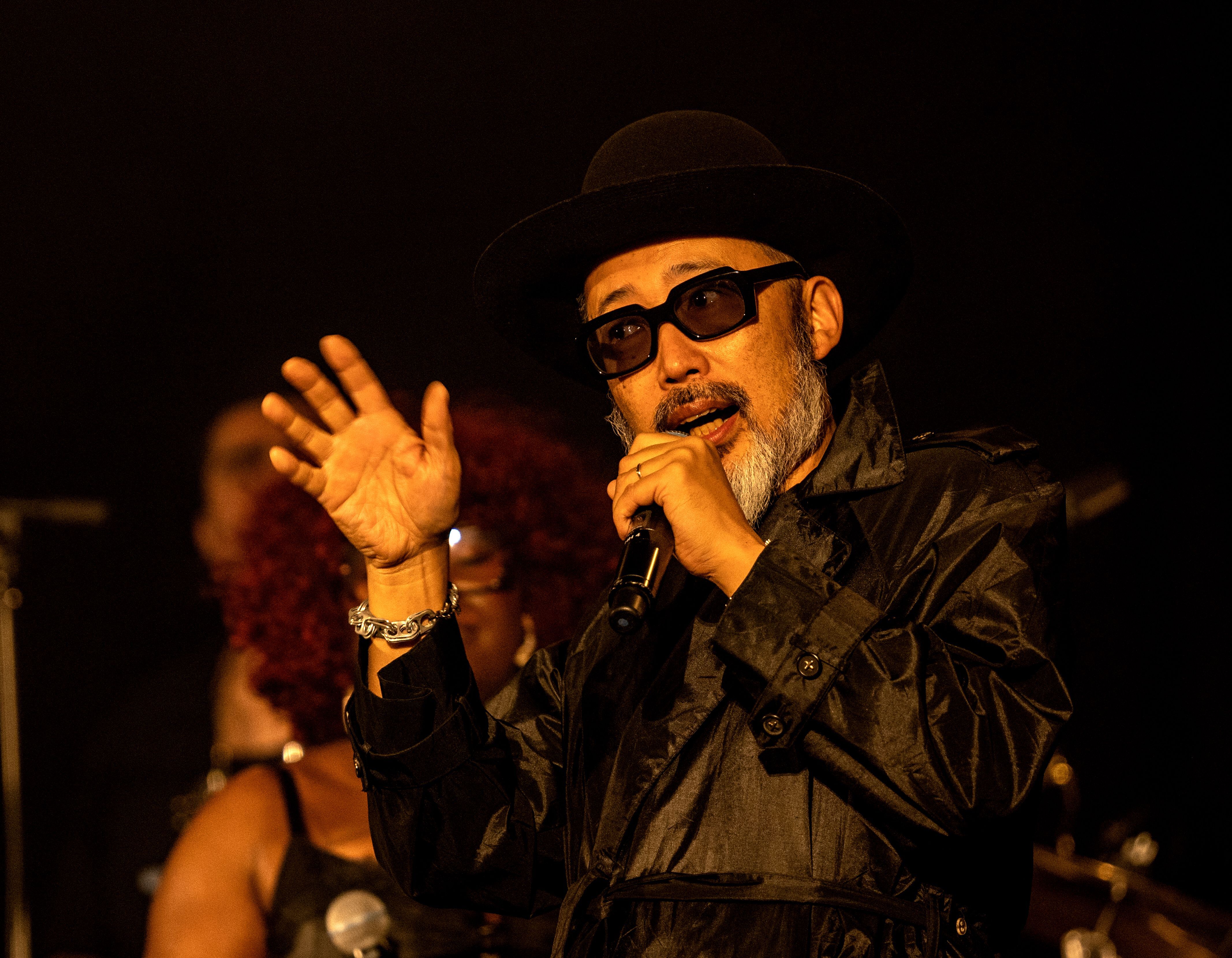
Islington’s famous Assembly Hall hosted the culmination of an enthralling ten days of music, with a show that further demonstrated the festival’s far-reaching embrace. The prestigious Kyoto Jazz Massive, with frontman Shuya Okino over from Japan especially, felt like fitting climax to our festival. Supporting them was the infectiously enthusiastic TC.KYLIE, herself over from Hong Kong, whose keys-led six-piece band blasted out cinematic, feature-length ensembles. Joking about how cold the stage was, she soon got the blood pumping, many a former raver in the crowd — no surprise given Okino’s roots as a DJ — heeding her calls for energy ahead of the headliner’s jazz-funk ensemble. Celebrating 30 years since KJM’s founding, Okino’s eclectic ten-piece collective paid homage to members past and present with a groove filled set. There was a delightfully boisterous spirit amongst the crowd, despite the late hour on a Sunday, mirroring our own sentiment towards the festival as a whole. Much like them, we never wanted it to end.
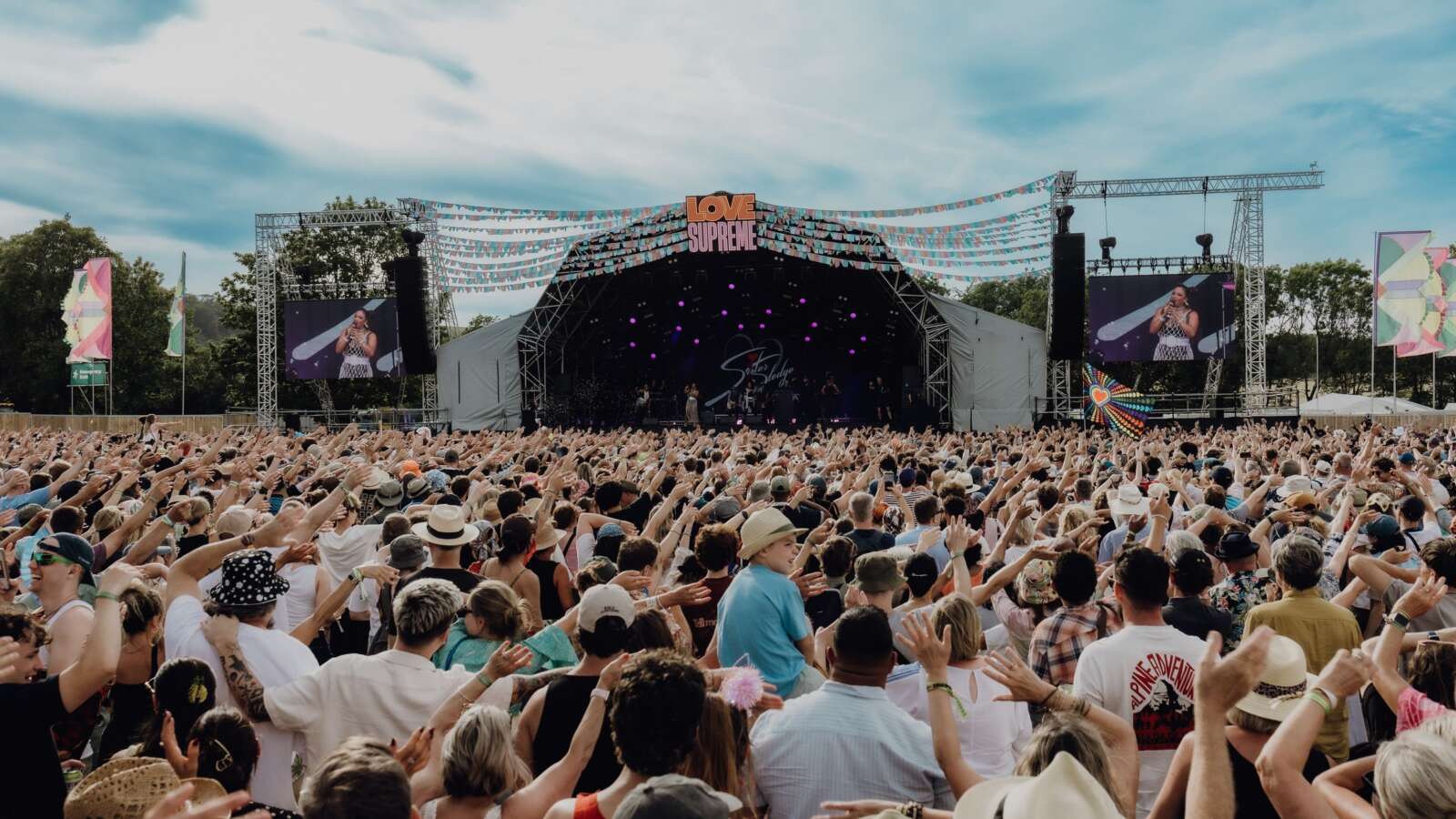
Therein lies our only gripe: a little over a week is simply not enough. Every night is double-, triple-, quadruple-booked citywide. Try as you might, seeing it all is a total impossibility. There’s not a bad show amongst them you could throw a dart at the calendar and strike gold every time. Audiences packed to the rafters, and diverse with it, demonstrate this is jazz in its most accessible form and for a genre long seen as the opposite, that’s a remarkable achievement. Everyone is welcome at the EFG London Jazz Festival, and everyone should try it.
Photos by Daragh Drake, Josh Hadfield, and Tatiana Gorilovsky
London, England
More Reviews
Related by performer, genre, or venue